From Reporting to Safety Intelligence
Laporan dampak satu tahun pertama implementasi LAPOR LEAD — PT Pelita Air Service Safety, Security & Quality (SSQ)
1. Executive Summary
Over the first twelve months, 64 reports were received with an overall closure rate of 89%. The program has matured from a simple reporting tool into an operational learning system that enables management to identify trends, prioritize systemic risks, and develop preventive actions.
The first year of LAPOR LEAD demonstrates that an operational reporting program can evolve beyond data collection into an effective organizational learning system. The next stage should focus on predictive safety, HFACS-based analysis and stronger integration with the corporate Safety Management System.
Best Practices Developed:
Program Overview
64
Reports
89%
Closure
11%
Still Open
3
Major Themes
Technical & Equipment / Organizational Gap / Training
Culture Transformation
Reporting Culture Transformation
2. Quantitative Analysis
2.1. Profile of Reporting Pilots
Reporter by Rank
2.2. Frequency and Distribution
High-Reporting Aircraft on July 2025 – July 2026: PK-PAX
Aircraft Report
Most Common Categories: ORGANIZATIONAL GAPS
2.3. Recurrence and Resolution Time
1. Recurring Reports This Month:
Two recurring reports this month were related to the late arrival of support personnel to conduct Daily Check-Up (DCU) at UPG. While the operational impact was minimal, these reports highlighted opportunities to improve scheduling, system, and coordination.
2. Categories with the Longest Resolution Time Delays:
a. Organizational Gaps
i. The most delay category, issue under this category (PK-PAH CG) experienced the most significant delays in resolution, initial reported on 14 July 2025.
3. Qualitative Analysis
3.1. Highlights from Reports
3.1.1. Process & Organizational Gaps:
- The aircraft center of gravity (CG) issue is still unresolved. This is affecting training and line checks, reducing available crew strength. (PRIORITY)
3.2. Safety Concern
3.2.1. FQI over-reading indication, safety risks behind it:
- Reduced fuel margin, actual fuel may be closer to minimum/reserve without crew realizing
- Late diversion decision, crew may delay diverting because indication appears sufficient
- Fuel imbalance risk, inaccurate side reading may mask L/R imbalance
- Incorrect fuel planning/monitoring, burn calculations become unreliable
- Worst case: fuel starvation or flameout if error is significant and not detected
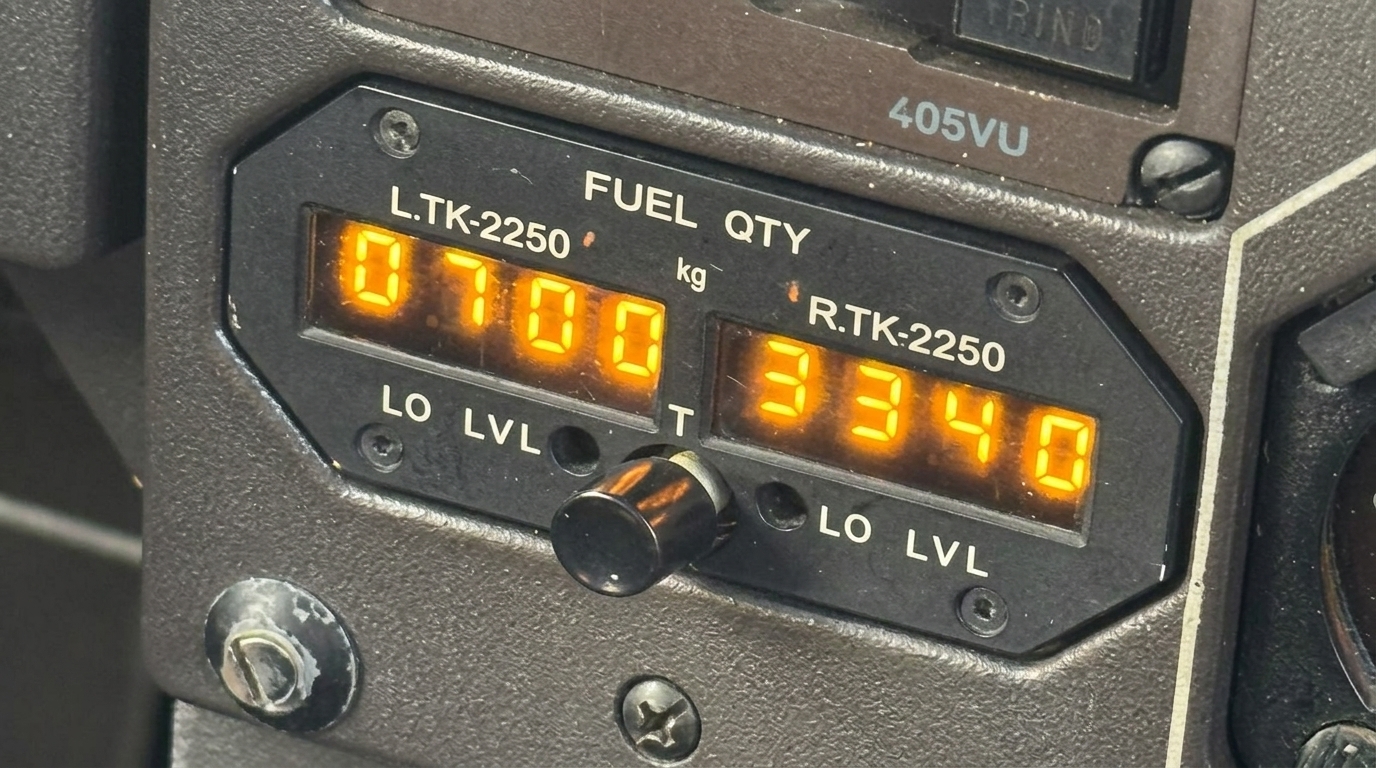
Fuel Quantity Indicator (FQI) Panel — Indicating L.TK vs R.TK fuel readout discrepancy
3.3. Training Concern
3.3.1. Transformation into CBTA concept
Most Common Competency Deficiencies
- ORCA Form implementation remains low, with approximately 90% of training sessions completed without the ORCA Form, indicating that the competency-based assessment process has not yet been consistently adopted.
- Implementation of the CBTA methodology by instructors remains inconsistent. Observations from separate training sessions showed that some instructors continue to rely on traditional training methods instead of applying the competency-based approach.
- Application of Procedures & Application of Knowledge were the most frequently identified competency gaps among Fixed-Wing Charter pilots, highlighting the need for greater consistency in applying Standard Operating Procedures (SOPs) during operations and need to strengthen pilot's ability to apply technical knowledge effectively during operational scenarios.
- The majority of pilot competency deficiencies were concentrated in the Application of Procedures and Application of Knowledge categories, emphasizing the need to strengthen instructor standardization and the consistent implementation of competency-based training practices.
- The Instructor Concordance Assurance Program (ICAP), recommended by IATA to support the transition to Competency-Based Training and Assessment (CBTA), will continue for the next two years before introducing Evidence-Based Training (EBT) principles.
3.4. Operational Concern
3.4.1. Operational Concern
The limited number of qualified RJ-85 PIC continues to present an operational challenge. In addition, VVIP RJ-85 flight crews have relatively low flying frequency, requiring them to operate complex missions with limited recent operational exposure. This may increase workload and emphasizes the importance of maintaining competency through effective scheduling, recurrent training, and proficiency monitoring.
3.5. Observations and Lessons Learned
| No. | Topics | Observation | Lesson Learned |
|---|---|---|---|
| 3.5.1 | CG Problem Affecting Crew Qualification (PRIORITY) | The aircraft CG issue hasn't been resolved. It's now causing delays in training and checks. | Issues that affect pilot qualification should be treated as urgent. We need fast fixes or temporary solutions so training and checking can continue. |
| 3.5.2 | FQI Malfunction (PRIORITY) | Fuel Quantity Indicator (FQI) right-hand side showed over-reading indication during operation. | Abnormal Fuel Quantity Indicator (FQI) indications require immediate cross-check using alternative verification methods such as manual fuel calculation, fuel slip confirmation, and cross-tank comparison. Recurring discrepancies should trigger technical investigation and reliability monitoring to prevent latent fuel imbalance or fuel planning errors. |
| 3.5.3 | Limited RJ-85 PIC Availability | The limited number of qualified RJ-85 PICs continues to constrain flight operations | Maintaining an adequate pool of qualified PICs is essential to ensure operational continuity. Early regeneration planning must be conducted immediately. |
| 3.5.4 | Low Flying Frequency of VVIP RJ-85 Crews | VVIP RJ-85 crews operate relatively infrequently but are required to perform high-demand missions that require a consistently high level of proficiency and professionalism. | Maintaining proficiency requires regular operational exposure. Increasing maintenance flight rotation from once every two weeks to once every week will provide more frequent flight experience, and expedite regeneration program. |
4. Detailed Report Listing
| No. | Date | Flight Number | Issue Reported | Category | Action Taken | Status | Final Closure Date |
|---|---|---|---|---|---|---|---|
| 1 | 14/07/2025 | IP 7300 | Distribusi kursi penumpang yg tidak merata menyebabkan CG berat kearah depan pesawat banyak barang pax yang tdk dpt naik atau diturunkan jadi banyak komplain | Organizational Gaps | Initial meeting conducted, still waiting for engineering dept. | Open | UNRESOLVED ISSUE FROM PREVIOUS 13 MONTHS |
| 2 | 16/11/2025 | PK-PAX | Perbaikan atau Penyempurnaan SOP ATR | Organizational Gaps | Editorial process | Open | UNRESOLVED ISSUE FROM PREVIOUS 9 MONTHS |
| 3 | 24/11/2025 | IP 7503 | TOLD Card incomplete | Organizational Gaps | Editorial process | Open | UNRESOLVED ISSUE FROM PREVIOUS 9 MONTHS |
| 4 | 16/01/2026 | IP 7504 | FQI R/H show overread | Technical & Equipment | Report submitted | Open | UNRESOLVED ISSUE FROM PREVIOUS 7 MONTHS |
| 5 | 20/01/2026 | IP 7503 | Ambiguous and non-standard wording was identified in the cruising announcement, which could potentially lead to passenger misunderstanding. | Communication & CRM | On progress | Open | UNRESOLVED ISSUE FROM PREVIOUS 7 MONTHS |
| 6 | 11/03/2026 | IP 7502 | RH FQI Overread | Technical & Equipment | Report submitted, waiting for rectification evidence | Open | UNRESOLVED ISSUE FROM PREVIOUS 6 MONTHS |
| 7 | 21/04/2026 | PK-PJJ | Jarang terbang sehingga mempengaruhi skill & proficiency | Organizational Gaps | Escalate the issue to top management | Open | |
| 8 | 20/06/2026 | PK-PJJ | crew vvip rj jarang terbang & harus terbang dgn presure tinggi | Training & Briefing | Escalate the issue to top management | Open | |
| 9 | 10/07/2026 | PK-PJJ | kekurangan pic pilot RJ | Organizational Gaps | Escalate the issue to top management | Open | |
| 10 | 13/07/2026 | IP 7503 | Tim kesehatan terlambat datang | Organizational Gaps | Follow up to SSQ | Open | |
| 11 | 15/07/2026 | IP 7503 | DCU personnel arrived late at UPG | Organizational Gaps | Follow up to SSQ | Open | |
| 12 | 17/07/2026 | SIM RJ-85 | Document ops (QRH) di SIM RJ Milan sudah tidak layak | Organizational Gaps | Follow up to OCC | Open |
5. Conclusion and Recommendations
The first year of LAPOR LEAD demonstrates that the program has successfully evolved from an operational reporting tool into a structured organizational learning system. With 64 reports received and an 89% closure rate, the program has improved reporting culture, increased management visibility of operational issues, and provided valuable insights to support data-driven decision-making.
The analysis identified that organizational gaps remain the most frequently reported category, highlighting that many operational challenges originate from systems, processes, and resource management rather than individual performance. Several long-standing issues, including the aircraft center of gravity (CG) issue and recurring Fuel Quantity Indicator (FQI) discrepancies, remain unresolved and continue to affect operations.
Flight Operations
- Focused SOP Reinforcement Program — Issue SOP reinforcement bulletin and conduct targeted briefings for pilots demonstrating SOP deviation. Monitor improvement via FDA.
- Instructor Standardization — Conduct BOI sessions to reinforce SOP application and review instructor performance feedback using student evaluation data, as well as to address input from line pilots regarding editorial improvements to SOPs and TOLD card.
- Revise Flight Deck Announcement Guide to provide clarity on pilot's feedback.
- Strengthen instructor standardization and ensure consistent implementation of the CBTA methodology & ORCA Forms across all training and checking activities.
- Continue the Instructor Concordance Assurance Program (ICAP) over the next two years to support the transition to CBTA and prepare for the introduction of Evidence-Based Training (EBT) principles.
- Prioritize improvement in the Application of Procedures and Application of Knowledge competencies through targeted training.
- Accelerate the regeneration of RJ-85 PICs and optimize VVIP crew scheduling to increase operational exposure and maintain proficiency.
Maintenance
- Fix recurring technical problems by finding and solving the root causes, while supporting the maintenance team in overcoming challenges.
- Resolve the center of gravity (CG) issue quickly, as it affects pilot qualification, training, and crew availability.
- Identify the root cause of the FQI over-reading and implement permanent corrective action.
SSQ (Safety, Security & Quality)
- Establish a cross-department response system where every dept will collaborate on reported issues promptly.
- Implement the HFACS framework to analyze occurrences within Pelita Air operations.
- Integrate LAPOR LEAD with the corporate Safety Management System (SMS) to enhance organizational learning and executive safety oversight.
LAPOR LEAD Operational Form
Standard Document Template & Verified Report Submissions (Doc. No. F.SOP.OC.03.027.01)
Doc. No. : F.SOP.OC.03.027.01
Revision No. : 00
Revision Date : 19 July 2025

LAPOR LEAD – Operational Learning & Reporting Form
Learn, Analyze, Prevent Operational Report through Leadership and Data
This form is intended to capture operational observations and day-to-day challenges encountered by flight crew. Your report helps improve procedures, communication, and crew experience. This is not a safety report, but an operational improvement tool.
1. Reporter Information (Optional)
Role: Anonymous
Name (optional): Unspecified
2. Event Information
Date of Event: 13/07/2026
Aircraft Type: ATR 42/72
Flight Number / Route: IP7503
Aircraft Registration (Optional): PK-PAX
Phase of Operation: Daily Check-Up
3. Event Description
What happened?
DCU personnel arrived late at UPG
What were the contributing factors (if any)?
Late arrival of DCU personnel due to inadequate time management and reporting discipline.
What went well (if any)?
Effective communication between the flight crew and ground support helped mitigate the operational impact.
Suggested improvements or learnings:
Reinforce punctuality requirements, enhance duty roster monitoring, and establish early notification procedures in case of potential delays.
4. Classification
Main Category:
Ground & Support
5. Follow-Up (Optional)
Would you like us to contact you for a follow-up? (Circle One): No
Thank you for your report. All submissions are treated with strict confidentiality and used solely for learning and operational improvement purposes.
LAPOR LEAD Year Two Roadmap
From Reporting to Safety Intelligence
From Reporting to Safety Intelligence (ICAO DOC 10159)
Implement HFACS for every event analysis
Activities
- • Develop HFACS classification guidelines
- • Train investigators
- • Classify all new LAPOR LEAD reports using HFACS
- • Create a standardized investigation template
- • Establish baseline human-factor trends
Deliverable
- ✓ HFACS embedded into the reporting process
- ✓ Consistent causal analysis across all events
Improve Executive Risk Visibility
Activities
- • Develop operational risk heat map
- • Categorize hazards based on likelihood and consequence
- • Identify recurring organizational risks
- • Prioritize mitigation actions
- • Produce executive safety dashboard
Deliverable
- ✓ Executive Risk Heat Map
- ✓ Monthly Management Dashboard
- ✓ Prioritized Risk Register
Integrate with Safety Management System (SMS)
Activities
- • Align reporting taxonomy with SMS
- • Integrate corrective action tracking
- • Connect reporting trends with Safety Performance Indicators (SPI)
- • Support Safety Review Board meetings
Deliverable
- ✓ Fully integrated reporting process
- ✓ Improved cross-functional coordination
- ✓ Enhanced organizational learning
Implement Learning from All Operations (LFAO)
Activities
- • Implement Flight Safety Foundation LFAO approach
- • Convert operational experience into shared knowledge and best practices across organization
Deliverable
- ✓ LFAO framework implemented
- ✓ Best Practice Bulletins
- ✓ Lessons Learned Library
9. System Architecture & Features
System Flow
User
Submit Report
(Website)
Google Sheet
(Reporting)
Email Notification
Admin Dashboard
(Management)
Main Features
(Must Have)Nice to Have
(Future Phase)Siap Berkontribusi untuk Keselamatan?
Setiap laporan yang Anda kirimkan membantu mencegah risiko dan memperkuat keselamatan operasional Pelita Air.
Buat Laporan Sekarang